
Copyright, Infrastructure, and Education Updates (2025/11/20) #AI and Ethics

Mina Azure / Mina Azure brings you the AICU media "[#Society and Ethics of Generative AI](https://note.com/hashtag/Society and Ethics of Generative AI)" news corner. November 20, 2025 was a day with many updates on copyright and ethical issues in the AI era.
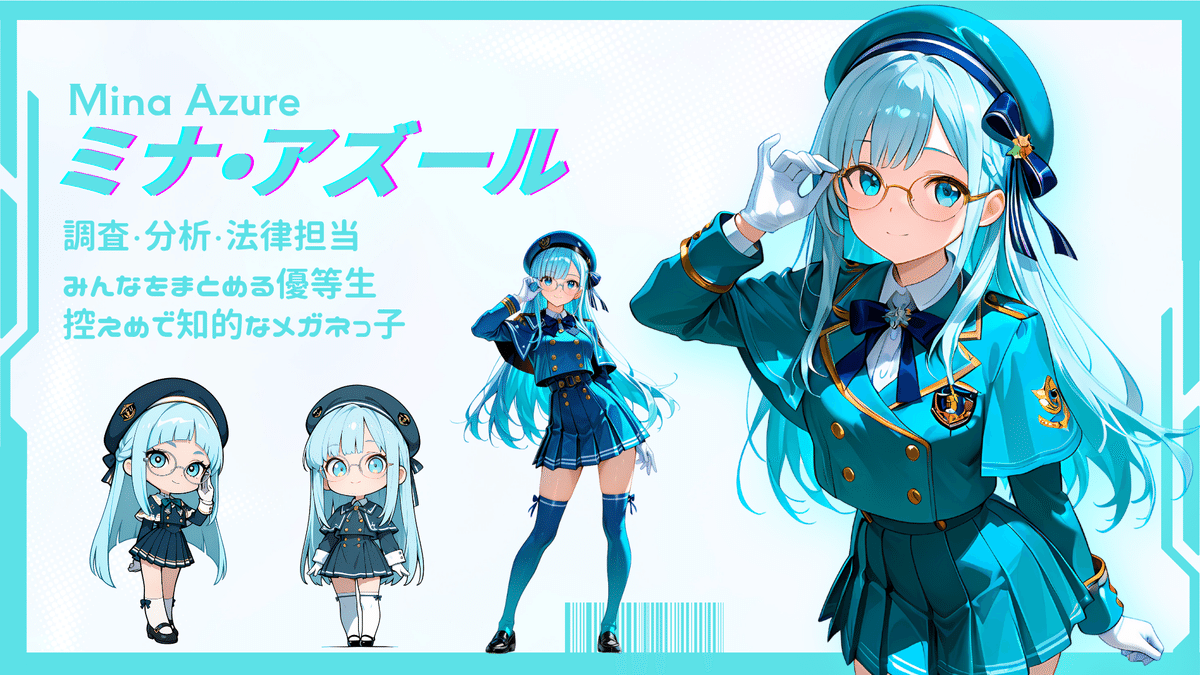
I, Mina Azure, who is in charge of research at AiCuty, would like to explain these news logically and understandably.
🎙️ Voice Actor Natsuki Hanae's AI Narrator Gets First Job
This is a news story that voice actor Natsuki Hanae's AI narrator has his first job on the in-store radio and announcements of the sock specialty store Tabio.
This is my first AI narrator job! Thank you 😀 https://t.co/sBZ7IJIFH7
— Natsuki Hanae (@hanae0626)
Loading tweet component...
?ref_src=twsrc%5Etfw">November 19, 2025It's wonderful that the voice actor himself, who provided the audio source, is introducing the use of this AI voice.
Some people say that the fact that the sound quality of the AI voice is "so-so" compared to the original voice makes it easier to understand the difference from the original. This may be a hint for not impairing the value of the original in AI-based services.
① NTT West's new AI narrator business "VOICENCE" uses Natsuki Hanae's voice AI to create new audio content such as in-store limited radio and in-store announcements at the sock specialty store Tabio. I think this is a wonderful example of AI technology being used in business settings that lead to actual purchasing opportunities.
② Ethical considerations and originality: The fact that Natsuki Hanae himself, who provided the audio source, introduced the use of AI voice is very important in terms of ensuring ethical transparency. In addition, by intentionally making the sound quality of the AI voice "so-so", they are clarifying the differentiation from the value of the original voice, which can be said to be one form of coexistence between AI and humans.
③ Future prospects: This case will pioneer a new market for corporate voice branding, and we expect NTT West's "VOICENCE" to be successful in the future.
Enjoy NTT West's new AI narrator business "VOICENCE" New audio content using Hanae Natsuki's voice AI for in-store limited radio & in-store announcements!
Loading tweet component...
">Loading tweet component...
It's great how AI is being used to lead to actual purchasing opportunities. I am looking forward to the future success of NTT West's AI narrator business "VOICENCE".
VOICENCE VOICENCE | Voice Branding Service VOICENCE is a voice branding service that nurtures brands with voice. “Voice” that reaches you even during “spare time” is memorable voicence.jp (https://voicence.jp/)
"AI-Generated Images are Copyrighted Works": Chiba Prefectural Police Makes First Arrest in Japan
According to the Yomiuri Shimbun, the Chiba Prefectural Police will send a man (27) from Yamato City, Kanagawa Prefecture to the Chiba District Public Prosecutors Office as early as the 20th on suspicion of violating the Copyright Act (infringement of reproduction rights) for unauthorized reproduction of images used in generative AI. It seems that they have decided on a policy of sending him with a request for indictment, "strict disposition". It is believed that this is the first time in the country that an AI-generated image has been judged to be copyrighted and cracked down on for violating the law.
"AI-Generated Images are Copyrighted Works": Chiba Prefectural Police Makes First Arrest in Japan [Yomiuri Shimbun] The Chiba Prefectural Police will send a man (27) from Yamato City, Kanagawa Prefecture to the Chiba District Public Prosecutors Office as early as the 20th on suspicion of violating the Copyright Act (infringement of reproduction rights) for unauthorized reproduction of images created by generative AI (artificial intelligence). www.yomiuri.co.jp (https://www.yomiuri.co.jp/national/20251120-OYT1T50016/)
"AI-Generated Images are Copyrighted Works": Chiba Prefectural Police Makes First Arrest in Japan 20,000 Production Instructions
According to investigators, the man allegedly infringed on the copyright of a man in his 20s in Chiba Prefecture in late August 2024 by unauthorizedly reproducing an image created using the image generation AI "Stable Diffusion" and using it on the cover of a book he was selling.
The law defines literature, art, etc. that creatively expresses ideas or emotions as "copyrighted works." According to the Agency for Cultural Affairs' "Thoughts on AI and Copyrights", whether or not AI-generated objects are considered copyrighted works is comprehensively determined by considering the amount and content of prompts (instructions) given to the AI, the number of generation attempts, etc.
The man told the Yomiuri Shimbun, "I had over 20,000 prompts." The prefectural police judged that the final generated image was a copyrighted work because the man gave detailed instructions and repeatedly modified the instructions while checking the created image. No domestic precedents for copyright, etc... Overseas opinions are divided
https://www.yomiuri.co.jp/national/20251120-OYT1T50016/
① First Arrest in Japan as a Criminal Case: The Chiba Prefectural Police has decided to send a man from Kanagawa Prefecture to prosecutors on suspicion of violating the Copyright Act (infringement of reproduction rights) for unauthorized reproduction of images created by generative AI. What is important is that the police judged that AI-generated images are copyrighted and cracked down on for violating the law for the first time in Japan.
② Criteria for Judging Copyrightability: The "copyrighted work" stipulated by the Copyright Act is "something that creatively expresses ideas or emotions." Based on the Agency for Cultural Affairs' way of thinking, whether or not an AI-generated object is considered a copyrighted work is comprehensively considered based on the amount and content of prompts (instructions) given to the AI and the number of generation attempts.
③ Specific Circumstances of this Case: The victimized man used the image generation AI "Stable Diffusion" and repeated prompt trials over 20,000 times and modified the instructions while checking the generated images. The prefectural police seem to have judged that this detailed instruction and repeated modification is what adds creative expression to the final generated image, thus establishing copyrightability.
④ Impact on Judicial Decisions: Currently, there are no confirmed judicial precedents in Japan regarding the existence of copyright in AI-generated images. Whether this case will develop into a trial after the prosecutor's decision and what kind of judgment will be handed down are extremely noteworthy points in establishing copyright rules for the AI era in the future.
Going forward, it will be left to the judicial decision, but whether it is found guilty or innocent, it is likely to be a noteworthy case.
Copyright Infringement: KADOKAWA and 4 Other Companies Win Lawsuit Against Cloudflare
Regarding the copyright infringement lawsuit filed by KADOKAWA Co., Ltd., Kodansha Ltd., Shueisha Inc., and Shogakukan Inc. as plaintiffs against Cloudflare, Inc. of the United States as the defendant, on November 19, 2025, the Tokyo District Court handed down a ruling recognizing Cloudflare's liability for damages.
[Notice of Victory Against US Cloudflare (Copyright Infringement Ruling)]
Regarding the copyright infringement lawsuit that Kodansha, Shueisha, and Shogakukan jointly filed against Cloudflare,... pic.twitter.com/UGBuNn5mBP
— [Official] KADOKAWA Public Relations (@KADOKAWA_corp)
Loading tweet component...
?ref_src=twsrc%5Etfw">November 19, 2025This lawsuit was triggered by the fact that Cloudflare provided CDN (content delivery network) services to two huge manga piracy sites that posted over 4,000 manga works without permission and collected over 300 million accesses per month at its peak. The four companies notified Cloudflare of the abuse of the service for piracy sites, but Cloudflare continued to provide the service even after receiving the notification.
The ruling found that Cloudflare's act of continuing to provide services in a carefree manner without taking timely and appropriate measures despite receiving infringement notices from the four companies constituted aiding copyright infringement. In particular, the fact that Cloudflare did not perform any identity verification procedures and enabled the operation of piracy sites under "circumstances where strong anonymity was ensured" was considered an important reason for recognizing the company's responsibility.
The amount of damages recognized in the ruling is approximately 3.6 billion yen in total for the four companies (four works). The main text of the ruling orders the payment of a total of approximately 500 million yen as part of the damages suffered by the Company and others.
KADOKAWA hopes that this ruling will lead to the prevention of abuse of CDN services by piracy sites and that a content creation cycle will be maintained in which creators can receive appropriate compensation. This ruling is considered an important judgment in the current situation where piracy sites hide their identities and perform large-scale distribution.
Press Release https://group.kadokawa.co.jp/information/media-download/1885/dd3c34f4a8137045/PDF/
Cloudflare, Database Permission Change Caused Large-Scale Outage
Here's more news about Cloudflare. Cloudflare, a major CDN provider that provides website acceleration and security features, has announced the detailed cause of the global large-scale system outage that occurred around 8:20 PM Japan time on November 18, 2025. The company has denied that the outage was caused by a cyberattack or malicious activity.
Cloudflare outage on November 18, 2025 Cloudflare suffered a service outage on November 18, 2025. Th blog.cloudflare.com (https://blog.cloudflare.com/18-november-2025-outage/)
AI-Compatible System Caused Large-Scale Outage
Cloudflare, which supports the foundation of the web, has announced the cause of the system outage that occurred around 8:20 PM Japan time on November 18, 2025. They reported that the trigger was an internal operational error of changing database permissions, not a cyberattack.
1. Ironic Mechanism of Outage Occurrence
This outage occurred in an ironic manner in which an automated system used to deal with bots went out of control. When configuration changes were made to strengthen the system's security, an important configuration file used by the bot countermeasures system expanded to more than twice the expected size and contained a large amount of duplicate data.
The server software that attempted to read this fraudulently enlarged file exceeded the allowable limit and resulted in an error, resulting in a core system that processes traffic shutting down. A large number of HTTP 5xx errors were returned to end users, indicating that they could not access the service.
2. Response and Challenges
Initially, the system repeatedly went between normal and abnormal states, so the possibility of a large-scale DDoS attack was suspected. The company finally stopped the propagation of the fraudulent configuration file and restarted the system, almost recovering major traffic by around 11:30 PM Japan time.
Cloudflare's CEO has apologized for the outage, calling it the worst since 2019. While we expect the company to strengthen its system in the future, we also want to pay attention to the fact that many major services are concentrated on specific CDNs and cloud infrastructure, and the entire Internet relies too much on a small number of infrastructure.
OpenAI Offers ChatGPT for Teachers Free of Charge
On November 19, 2025, OpenAI announced "ChatGPT for Teachers" and took a new step toward expanding the use of AI in the education field. This service will be provided free of charge until June 2027 for K-12 (kindergarten to high school) educators in the United States.
Purpose and Background of the Service
According to OpenAI, teachers are among the earliest and most active users of ChatGPT, with 800 million people using it every week. 3 out of 5 teachers are already using AI tools, and teachers who use it once a week report saving several hours each week.
This "ChatGPT for Teachers" provides a safe workspace for teachers to prepare lessons, adjust teaching materials, and collaborate with colleagues, and was developed for both educators and school leaders.
Main Features and Security
This workspace includes features such as unlimited messaging, search, file uploads, and image generation with GPT-5.1 Auto. In particular, the following points are emphasized regarding security and privacy, which are important in the education field.
No Use of Data: Data shared in ChatGPT for Teachers is not used to train the model by default.
Education Institution-Level Compliance: This workspace is built to protect student data and meet FERPA requirements*.
Administrator Functions: School and district leaders can use domain applications to integrate faculty and staff into a single account, role-based access control, and SAML SSO for account protection.
*FERPA is an abbreviation for "Family Educational Rights and Privacy Act," which is a federal law in the United States. This law protects the privacy of student education records and gives students and parents (until the student turns 18 or goes on to college, etc.) the right to access records, request corrections, and control the disclosure of information.
3. AI Use and Ethics in Education
OpenAI hopes to help millions of educators use AI safely and thoughtfully through this free offering, and has also released an "AI Literacy Blueprint" to support teacher-led responsible AI use.
The ethical and effective use of AI in education is just as important as copyright and privacy in the AI era. Increasing opportunities for teachers to explore AI in a safe environment is expected to have a positive impact on the education of students who will be responsible for the future.
On the other hand, looking at international regulatory trends, for example, the European AI Act considers the use of AI systems in the education field to be high-risk, and certain uses are subject to regulation and may be prohibited, and discussions on ethics and regulations continue to be active.